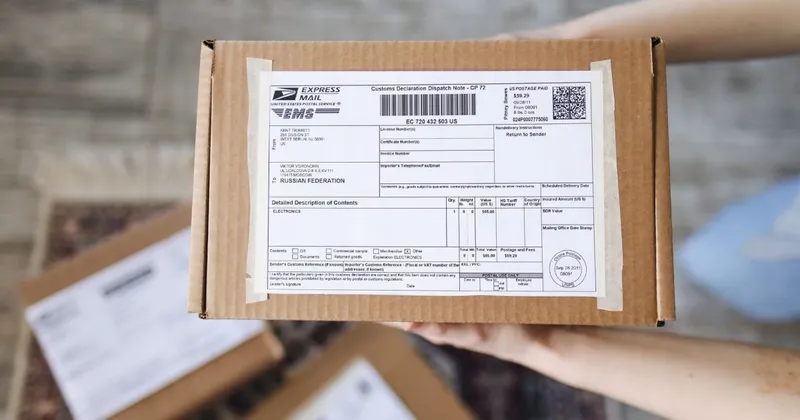
If you ship goods abroad, you have probably heard the term "Incoterms". They are rules set by the International Chamber of Commerce (ICC) that define who is responsible for what, and when, in international trade. The current edition is Incoterms 2020, with 11 rules. The three senders run into most are EXW, DAP and DDP. They decide not only your costs as a sender, but also who pays the duties.
On this page
What Incoterms are and why they matter to senders
Incoterms define the moment risk and costs pass from seller to buyer. They also set which party handles export and import formalities and pays the related charges. The wrong term can mean unexpected costs or even a parcel held at customs. So before you ship, it pays to understand exactly what each term means.
Incoterms are international, but they often apply to ordinary courier shipments too. If you send a parcel to the USA, for example, the term decides whether you or the recipient pay the import duties. You can read about shipping to the USA separately, but the basic rule is simple: the more responsibility the seller takes on, the more of the duties falls on the seller.
Who handles each step under the three terms you will meet most:
- Seller
- Buyer
| Term | Export clearance | Main transport | Import clearance | Import duties and taxes | Delivery to the door |
|---|---|---|---|---|---|
| EXW | Buyer | Buyer | Buyer | Buyer | Buyer |
| DAP | Seller | Seller | Buyer | Buyer | Seller |
| DDP | Seller | Seller | Seller | Seller | Seller |
EXW: the seller only gets the goods ready
EXW (Ex Works) means the seller has met their obligations once the goods are ready for collection at their premises. From that moment the buyer takes on almost all costs and risk, export formalities included. In other words, the buyer has to sort out export documents, pay any export charges and arrange transport from the seller's warehouse. This can work when the buyer has a trusted carrier of their own, but it takes a lot of know-how and time.
In practice it looks like this: a warehouse worker pushes the pallets to the gate, and from there the buyer's people take over. No export declarations and no loading-bay booking on the seller's side. But if the buyer lacks experience, the export declaration or the loading slot can get stuck. The shipment sits longer than expected, and nobody is responsible for it.
DAP: delivery without import duties
DAP (Delivered At Place). The seller delivers the goods to a named place in the destination country and handles export formalities. The buyer handles import clearance. In short, anything to do with import is on the buyer. This is the term you meet most often with courier parcels: the sender pays transport to the door, and the recipient, once notified, pays duties directly to the courier or customs. Say a buyer in the United Kingdom orders an item. A few days later they get a text message with a payment link. Unexpected? Very much so, especially if nobody mentioned it.
DAP is handy when you want to shift the duty burden to the recipient. Still, the recipient should know they will have to pay extra. When shipping to Switzerland, for example, where special import requirements apply, agree in advance who covers these charges. Read more about shipping to Switzerland on the SendVersal site.
DDP: the seller covers everything
DDP (Delivered Duty Paid) is the only Incoterms rule under which the seller pays import duties. The seller delivers the goods to the named place and pays all costs, including import duties and taxes. The buyer pays nothing extra on receipt. For an online store, DDP means the customer pays no surprises, but the seller has to build the duties into the price.
DDP is attractive to buyers because they know the final price upfront. For the seller, though, it means more responsibility and risk. If you are unsure about duty rates, DDP can be tricky, since you need to calculate all charges precisely. Even so, if you want to offer customers transparent pricing, DDP is worth considering.
EXW, DAP and DDP side by side
The buyer collects the goods from the warehouse. The seller arranges transport to the door. And under DDP, the seller also takes care of customs formalities and pays for them. That, without much interpretation, is how the three terms look. What is left for you depends on how involved you want to be in the parcel's journey.
Know the shipping cost before you choose a term
Compare courier prices for your parcel side by side, then decide who pays for what. No contracts.
How to choose the right term for your shipments
Imagine this: a customer orders an item and a week later gets an email from the courier with a bill for duties. If you chose DAP, that is exactly what happens, and the customer may feel cheated. For an online store shipping small orders, DAP can look simpler because you do not have to calculate duties upfront. But a surprise bill like that can spoil the experience. DDP removes the problem, although it takes more effort to work out the final price and roll all charges into one number.
To compare courier prices and choose the best option for your shipments, use the courier price comparison platform. You will find current rates there and can more easily calculate total shipping costs under your chosen Incoterms rule.
Keep in mind that DDU has not been used since Incoterms 2010, and DAT was replaced by DPU in 2020. So if you see DDU in old documents, the closest current term is DAP.
- Incoterms decide who pays duties: under EXW and DAP the buyer pays import duties, under DDP the seller does.
- DAP is common for courier parcels but can surprise buyers with a duty bill; DDP gives them a final price upfront.
- Before you ship abroad, pick one term and tell your customer whether they will pay anything on delivery.
Frequently asked questions
DDP (Delivered Duty Paid). Under this rule the seller delivers the goods to the destination and pays all import duties and taxes. It is the only Incoterms 2020 rule that puts this responsibility on the seller.
No. Under DAP the seller pays transport to the destination and handles export formalities, but the buyer handles import clearance and pays import duties and taxes. So the recipient will have to pay extra.
Then choose DDP. As the seller, you build all duties into the price, and the customer receives the parcel without any extra payments. It can add admin work, but it improves the customer experience.
Mantas runs carrier partnerships and SendVersal's own-line network to the UK and Germany. He writes about lanes, customs and what drives parcel prices.
All 5 articles by Mantas